

The irony isn’t lost on us. We are The Batter’s Den. Naturally, we spend a massive amount of our time talking about bats, exit velocity, launch angles, and swing mechanics.
But unless you are a full-time designated hitter, you play both sides of the ball.
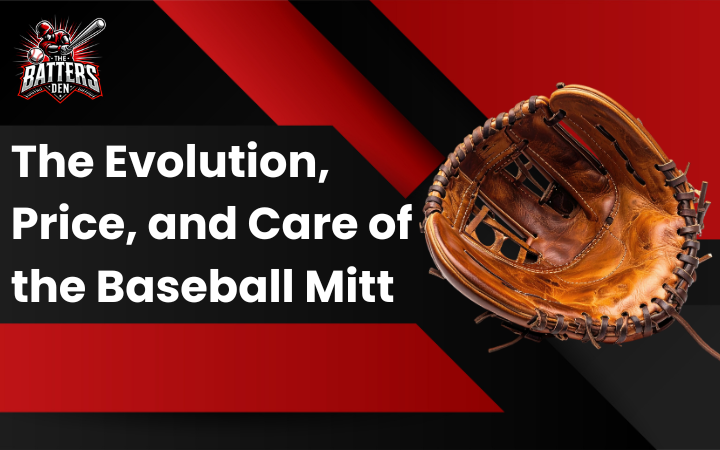
Today, we are stepping out of the batter’s box to talk about the piece of equipment people obsess over, spend way too much money on (kidding… sorta), and then routinely leave baking in the trunk of their car: the baseball and softball glove.
Your glove is your best friend on the diamond. Understanding how it evolved, why the price tag matters (and why it doesn’t), and how to actually take care of it will absolutely elevate your defensive game.
A Quick Trip Down the Foul Line (The Evolution)
If you think breaking in a stiff new glove is painful, be thankful you didn’t play in the late 1800s. Back in the early days of baseball, playing with a glove was actually considered unmanly. Players caught screaming line drives barehanded, which went about exactly as well as you would expect.
When players finally decided they liked having functioning fingers, the first gloves were essentially just leather work gloves. They cut the fingertips off to allow for better throwing and added a tiny bit of padding to the palm.
Over the decades, the glove evolved from a simple protective barrier into a highly engineered, webbed ball-trap. Today, gloves are hyper-specialized. Catchers use heavily padded mitts to handle premium velocity, middle infielders use shallow pockets for lightning-fast transfers, and outfielders use massive, elongated webs to go robbing home runs at the fence.
The $300 Question: Does Price Equal Skill?
Here is the honest truth: Buying a $300 pro-model glove will not magically stop you from booting a ground ball. If your footwork is sloppy and your glove angle is wrong, premium leather is not going to save you.
So, what are you actually paying for when you drop that kind of cash? Durability.
Expensive gloves use stiffer, much higher-quality leather (like kip or steerhide). Because of this, they are incredibly hard to break in. It takes weeks of work. However, once they are broken in, they hold their shape and pocket for years. Cheaper gloves, on the other hand, are game-ready on day one, but they tend to get floppy and lose their rigid pocket after a single grueling season.
The Verdict: Buy the glove that fits your current level of play. A high-end glove is a long-term investment in durability, not a shortcut to winning a Gold Glove.
The Hitting Connection: How the Cage Helps the Glove
It sounds counterintuitive, but taking batting practice actually makes you a better fielder. Hitting and fielding are two sides of the same coin, and the secret to both is elite hand-eye coordination.
- Tracking the Ball: When you take live BP or do front flips in the cage, you are aggressively training your brain to pick up the spin, speed, and trajectory of a moving ball. That exact same visual tracking translates directly to reading a weird hop on a grounder or tracking a pop-fly lost in the sun.
- Soft Hands: Good hitters don’t have tense, rigid hands on the bat; they are loose and athletic. Neither do good fielders. Working on relaxed, quick hands in the batter’s box directly translates to having “soft hands” on the infield dirt, allowing you to absorb the baseball rather than fighting it.
Stop Neglecting Your Leather (Basic Care)
You just spent good money on a glove. Stop ruining it. Here are the three golden rules of glove care:
- Avoid the Trunk of Death: The absolute worst thing you can do is leave a leather glove in a hot, humid car or buried at the bottom of a dirty gear bag beneath your muddy cleats. Extreme heat dries out the leather and destroys the lacing.
- Maintain the Pocket: Never throw your glove flat on the ground or stuff it flat into a bag. Always keep a baseball or softball in the pocket when you aren’t using it. Wrap it with a glove wrap or a large rubber band to hold that perfect bowl shape.
- Conditioning: Leather is skin. If it gets dry, it cracks. Apply a light coat of glove conditioner once or twice a season to keep the leather hydrated, heavy, and game-ready.
The Bottom Line
Defense wins championships, and your glove is your ultimate defensive tool. Respect the leather, understand its purpose, and put in the work to master it.
While we are The Batter’s Den, we know that a great swing doesn’t mean much if you can’t make the play in the field. Our expert trainers run elite defensive clinics and private fielding lessons, too.
Ready to put your leather to work? Open up The Batter’s Den App to book a fielding session with one of our trainers today!